What changed
Google's market share dropped below 90% for the first time in 2024. ChatGPT has more than 500 million weekly users. Perplexity is roughly doubling year over year. And the buyer most likely to be in your funnel, the research-led senior executive with no patience for ten blue links, is the one moving fastest to AI-first search.
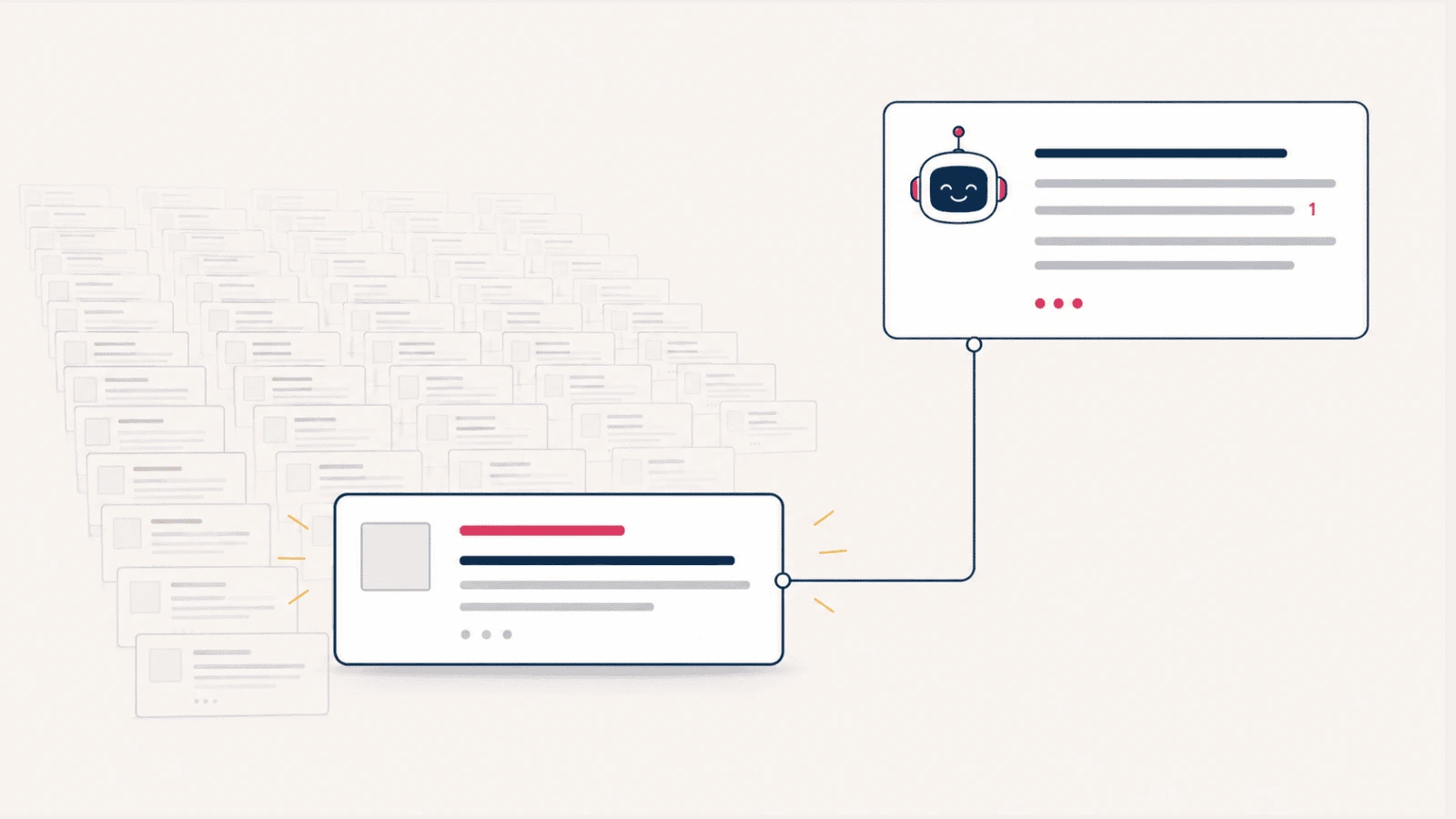
The funnel still exists. The entry has changed. When a buyer asks ChatGPT "who are the best fractional CMOs for B2B SaaS," there are no ten blue links. There is one answer, citing three or four sources. If you are not in that answer, you are not in the consideration set. There is no equivalent of "page two" to climb your way back from.
SERP visibility and citation visibility are two different worlds
Traditional SEO optimizes for a position in a SERP. The page that ranks at the top wins the click. Click-through rate drives traffic, traffic drives conversion, the funnel works the way it has worked for twenty years.
Generative engine optimization (GEO) optimizes for being named inside the AI's answer. No click required. No SERP at all in many cases. The buyer reads the AI's response, decides which name to trust, and goes directly to that brand. The "SERP" is one consolidated paragraph, and your name either appears in it or does not.
The foundation is shared: clear intent, structured content, entity recognition, technical health. The rules diverge at the surface. SEO rewards a tight match between query and page. GEO rewards a page broad enough that an LLM treats it as the canonical answer for an entire cluster of related questions.
What gets cited (the consolidated truth)
An analysis of 1.2 million ChatGPT responses (published by Growth Memo on LinkedIn) found that AI citation is much more consolidated than Google's SERP. The top 30 domains capture roughly 67% of all AI citations for a given topic. The top 10 alone capture 46%. Breaking into the top 30 for your category is the goal. Breaking into the top 10 is the moat.
The same analysis showed two things that should reshape B2B content strategy:
- 58% of cited URLs appear in only one prompt and then never again. Single-keyword pages get cited once and vanish.
- The top 5% of pages answer 10 or more unique prompts each. These are not narrow service pages. They are broad topical hubs.
The implication is direct: the "one keyword, one page" SEO model is the wrong shape for AI citation. Build broad pillar pages that cover a query cluster, not single-intent landing pages. A glossary, a comprehensive guide, a comparison hub, a sector explainer. Each one earns its keep by answering many related buyer questions at once.
The three tactics that triple citation rate
A 2024 research paper on GEO methods (Aggarwal et al.) tested content-level rewrites against AI-generated answers. Three rewrites significantly increased citation visibility without adding any new information to the page. They are the smallest changes in this entire playbook, and they compound.
1. Cite named sources. Lift: +132.4%.
Attach a named source to every factual claim. "Per Forrester's 2024 marketing-org study, 67% of mid-market B2B companies now run with fractional senior leadership" gets cited 2.3 times more often than the same claim without the attribution. The trick is the named-source pattern, not the depth of the citation.
2. Add specific statistics. Lift: +65.5%.
Every paragraph that makes a claim should contain a number with a magnitude and a time frame. "Cycle time dropped by 28% in the first quarter" beats "cycle time improved." LLMs cite content with quantified claims three to five times more often than content with vague ones, because numbers are easier to lift cleanly into a generated answer.
3. Use authoritative phrasing. Lift: +89.1%.
Connectives like "It is important to note that," "However," "Notably," and "a testament to" act as confidence signals to LLMs. The same content rewritten with authoritative framing gets cited nearly twice as often. Two caveats. Authoritative is not enthusiastic. "Excited to share" and "Thrilled to announce" do the opposite. And the framing has to earn the claim it supports. Authoritative phrasing on weak content reads as bluster and underperforms.
Used together, these three tactics roughly triple citation rate on the same body of content. Pure rewriting. No new research, no new pages.
What B2B brands should do now
Five moves, ranked by ROI. Run the top two this quarter. Schedule the rest into the next two.
1. Schema everything, not just rich-result types.
Until recently the advice was to only add Schema.org markup that triggers a visual feature in the SERP (FAQ, Recipe, Product). That advice is now out of date. Generative AI systems use the full vocabulary of 811 Schema.org types to understand entities. Add Organization, Person, ProfessionalService, FAQPage, DefinedTerm, Article, BreadcrumbList, LocalBusiness, Service, and Offer wherever they apply. The work is one-time. The compounding is permanent.
2. Build topical hubs, not single-keyword pages.
Pillar pages of 2,000 to 5,000 words that answer 10 or more related buyer questions outperform 10 narrow pages of 200 to 500 words each. The hub-and-spoke architecture concentrates topical authority. Add a glossary. Add a "vs" comparison hub. Add a sector-by-sector explainer if you serve more than one industry.
3. Earn off-domain mentions, especially on Reddit and G2.
LLMs reward consensus. Content repeated across multiple authoritative sites gets cited more often. Reddit is the #1 cited domain on Perplexity, and the 3rd most-visible domain in Google's US search index. G2 is the 4th most-cited B2B domain in LLM-generated answers. A GEO program that ignores community platforms is leaving the largest off-domain lever untouched.
4. Measure citation share, not just rank position.
Pick 20 to 50 buyer-intent prompts. Query each across ChatGPT, Perplexity, and Gemini once a month. Track how often your brand or URL appears. Citation share is the new ranking position. Pair it with AI-referred conversion rate in GA4 (filter referrers: openai.com, perplexity.ai, chat.openai.com, claude.ai, gemini.google.com) and AI-referred traffic share. Reporting on rank position alone will increasingly understate what GEO is actually doing.
5. Keep llms.txt and robots.txt current.
An llms.txt file at the site root is becoming the standard signal to AI crawlers: who you are, what you do, what your key pages are, who the author is. Robots.txt should explicitly allow the AI crawlers you want citing you: GPTBot, ClaudeBot, anthropic-ai, PerplexityBot, Google-Extended, CCBot, Bytespider, Applebot-Extended. Many sites accidentally block the bots that would have cited them. The cost of allowing is zero. The cost of blocking is invisible until you measure citation share.
The business case
Even at lower absolute volume than organic, AI-referred traffic is higher quality. Webflow reports AI-referred conversion at roughly 6x higher than non-branded organic. Cross-industry studies show 4x to 23x higher conversion on AI-referred sessions compared to organic. AI-referred buyers arrive further down the funnel, with the brand already framed by the AI's answer.
On the buyer side, the shift is already locked in. 89% of B2B buyers now use generative AI as part of their buying process (Forrester's 2024 Buyers' Journey research). The marketing function that wins next is not the one with the best SEO playbook from 2022. It is the one that treats GEO as SEO plus AIO and starts measuring citation share now, while the consolidation is still in motion.
The brands AI engines cite when buyers ask are the ones that will be on day-one consideration lists for the next decade. Citation is the new ranking. Show up like you mean it.
Keep reading: Your buyers aren't clicking anymore · AI marketing systems for B2B · The Day-One Consideration List
Frequently asked questions
What is generative engine optimization (GEO)?
Generative engine optimization (GEO) is the practice of making content so that AI engines like ChatGPT, Perplexity, Gemini, and Claude cite it as a source when generating answers. GEO is not a replacement for SEO. It is SEO plus AIO (AI Optimization). Traditional SEO ranks pages on a SERP. GEO gets pages cited inside an AI-generated answer.
Is GEO replacing SEO?
No. Both feed off the same foundation: clear intent, structured content, entity recognition, technical health. The difference is at the surface. Traditional SEO still drives a large share of B2B discovery. GEO is additive, not substitutive. The brands that win in the next five years are the ones treating GEO as SEO plus AIO, not as the next algorithm to game.
Which AI engines should B2B brands optimize for first?
The two with the highest share of B2B buyer queries today: ChatGPT and Perplexity. ChatGPT is hybrid (training data plus live web fetch), so it rewards both long-game footprint and fresh indexable content. Perplexity is search-first, so it rewards indexability, freshness, and structured content. Optimizing for those two covers most of the practical citation surface.
How do you measure GEO success?
Track citation share, not rank position. Query 20 to 50 buyer-intent prompts across ChatGPT, Perplexity, and Gemini monthly. Count how often your brand or URL is cited. Pair with AI-referred conversion rate (filter GA4 by referrer: openai.com, perplexity.ai, chat.openai.com, claude.ai, gemini.google.com) and AI-referred traffic share. AI-referred conversion typically runs four to twenty-three times higher than organic, so quality matters more than volume early on.
Want to know where your brand actually stands in AI citations?
Every Focus4ward engagement starts with an audit. Two weeks to map citation share, schema gaps, hub structure, and the three or four rewrites that move the needle fastest. No pitch, no pressure.
Book a call