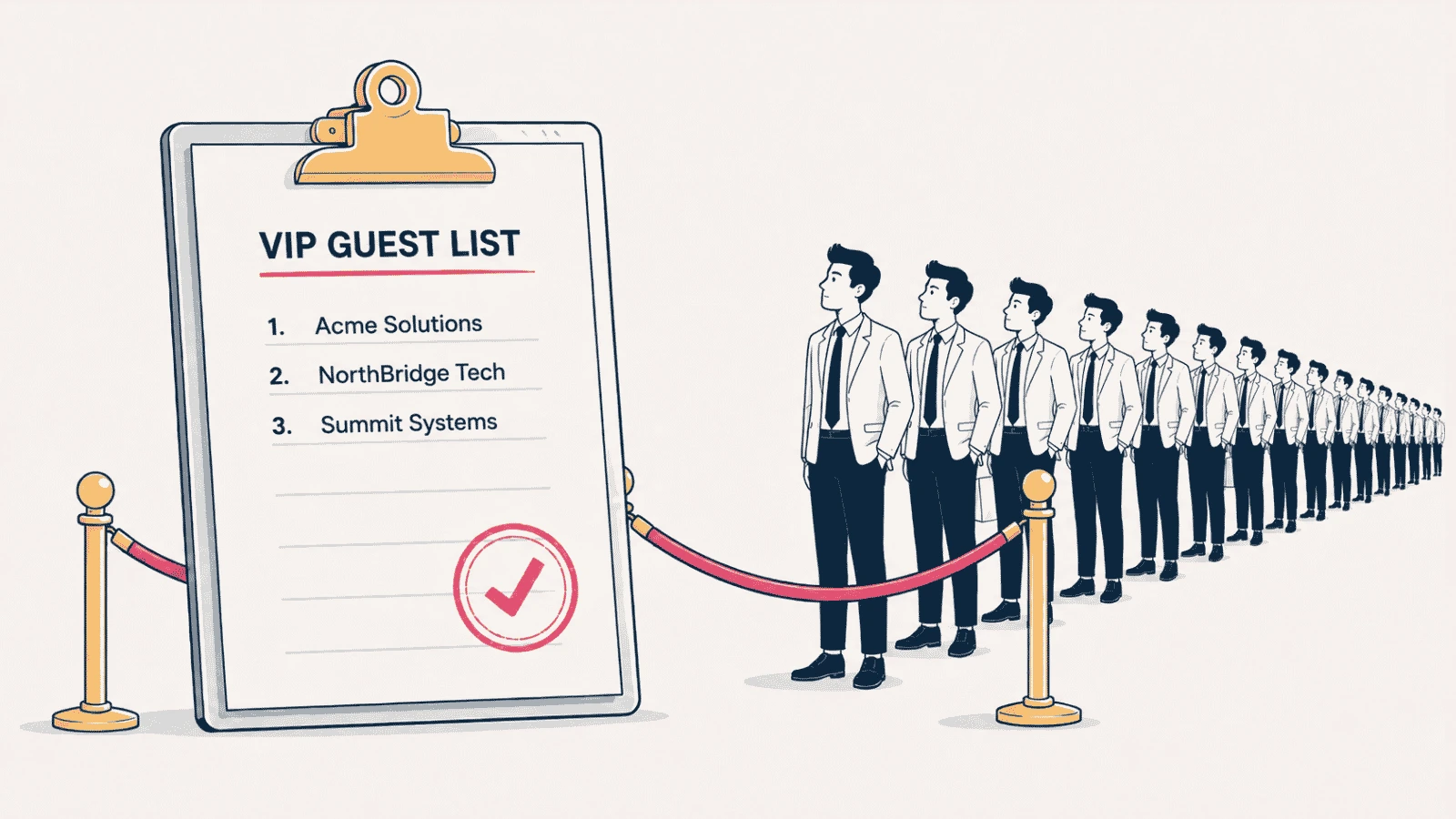
Mid-market evaluates. Enterprise pre-decides.
When a mid-market buyer has a problem, they go looking. "Who should we evaluate?" They build a list, run a process, compare options. Enterprise does not work that way. By the time the problem has a name, the list of who will be considered already exists. The buyer is not searching for the best option. They are confirming a choice they already trust.
Most enterprise deals go to vendors who were already on that list before any formal research started. Call it the Day-One Consideration List. If your brand is not on it on day one, you are not catching up later in the funnel. You are not in the deal.
The buyer is making a safe choice, not the best one.
Enterprise buyers are not trying to find the optimal product. They are trying to make a decision they will not get fired for. "Nobody got fired for buying IBM" still rules the procurement room, even when the logo on the door has changed.
And it is not one person. The buying group, security, legal, procurement, finance, the actual user, the budget-holder, all have to feel safe choosing you. That safety is earned long before the RFP exists.
Two things get you on the list. Both required.
Trust
The buying group has to feel safe choosing you. That is built through visibility, consistent signals, and recognition over time. Not a campaign in the quarter the deal appears. By then it is too late to build it.
Distinctiveness
You also have to stand out enough that someone in the room actually says your name when the question comes up. Trust alone gets you onto the safe list. Distinctiveness is what gets you mentioned in the first place.
Why companies miss this on the way up.
This is what trips up companies graduating from mid-market to enterprise. They keep selling on features and ROI. Those were the right answers for mid-market, where buyers genuinely evaluate. They are the wrong answers for enterprise, where the decision is already half made.
The brand that wins enterprise did not earn it at the bottom of the funnel. It earned it months, sometimes years, before the funnel existed. That work looks like presence, not pipeline: showing up where the buying group already is, saying something distinct enough to be remembered, consistently enough to be trusted.
Don't sell to enterprise. Be remembered by it.
Keep reading: Citation is the new ranking · Your buyers aren't clicking anymore · AI marketing systems for B2B
Frequently asked questions
What is the Day-One Consideration List?
The short list of vendors an enterprise buyer already trusts before the problem even has a name. Most enterprise deals go to brands that were on it before any formal research started. If you're not on it on day one, you're not catching up later in the funnel. You're not in the deal.
How is enterprise buying different from mid-market?
Mid-market evaluates: they have a problem, build a list, and compare options. Enterprise pre-decides: by the time the problem is named, the list of who gets considered already exists. The buyer is confirming a choice they already trust, not searching for the best one.
What gets a brand onto the list?
Two things, both required. Trust, built through consistent visibility and recognition over time so the whole buying group feels safe choosing you. And distinctiveness, so someone in the room actually says your name. Trust gets you onto the safe list. Distinctiveness gets you mentioned in the first place.
Why do companies moving upmarket miss this?
They keep selling on features and ROI, which were the right answers in mid-market where buyers genuinely evaluate. In enterprise the decision is already half made, so the work that wins is presence built months before the funnel exists, not bottom-of-funnel pitching.
Not sure if your brand is on the list?
Every engagement starts with an audit. Two weeks to see where you actually stand with the buyers who matter, before touching anything. No pitch, no pressure.
Book a call